TRADITIONAL TATTOOING

There is a reason western traditional tattooing has been around for over a hundred years and shows no sign of going anywhere. It works. The bold black outlines hold. The solid colour fills age well. The compositions are built to last on skin in a way that more delicate or fashionable styles often aren't. Traditional tattooing was figured out a long time ago and the fundamentals haven't needed changing.

Timeless and Classic

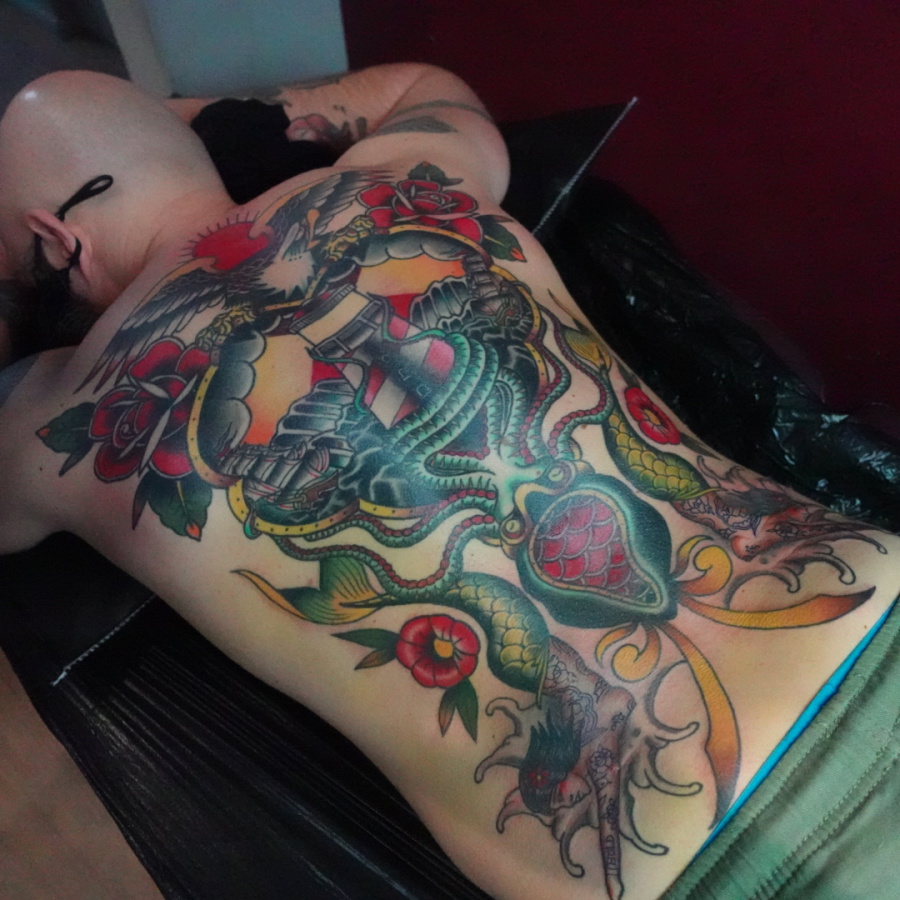
The visual language is one most people recognise even if they couldn't name it. Strong black outlines. A palette built around reds, yellows, greens, blues and black. Subject matter drawn from a canon that developed across the docks, the military and the travelling tattoo parlours of the early twentieth century. Eagles and panthers. Roses and daggers. Swallows and snakes. Anchors, hearts, banners and portraits. Each image carries its own symbolism, its own history and its own visual role within the tradition.


What makes traditional tattooing compelling isn't nostalgia. It's the fact that the rules exist for a reason. The bold outline creates a barrier that stops ink migration as the tattoo ages. The limited palette means the colours remain readable decades later. The graphic flatness means the design holds its shape even as skin changes over a lifetime. A well-executed traditional tattoo at twenty years old often looks more like itself than a delicate fine line piece at five.

What Makes a Good Traditional Tattoo

The rules of traditional tattooing look simple from the outside. Bold outlines, solid fills, limited palette. In practice executing the style well demands a real understanding of what those rules are actually doing and if you break them how to do it correctly and still feel traditional.


Linework is the foundation. Lines need to be clean, consistent and confidently applied. A wavering line in traditional tattooing has nowhere to hide. The same is true of colour packing, the solid fills that give the style its graphic punch need to be even and saturated without overworking the skin. Getting that right comes from experience, not enthusiasm.


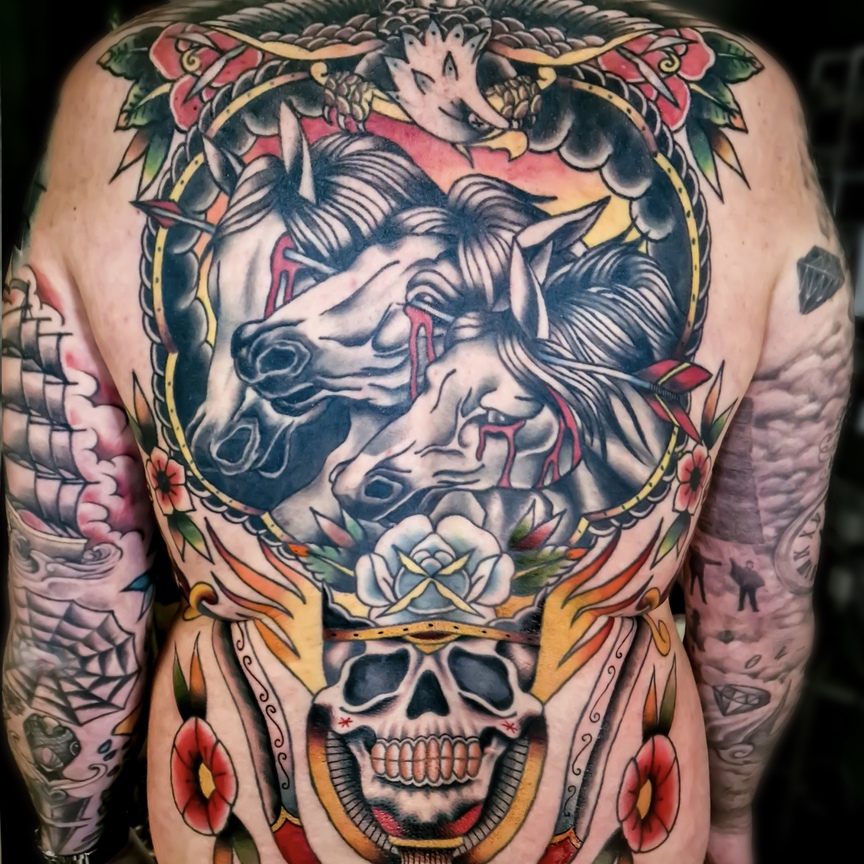
Composition matters enormously. Traditional tattooing is built around designs that work as complete images, contained within themselves, reading clearly from a distance.

The classic subjects exist in the canon because they solve compositional problems that artists have been working on for generations. A rose fills a space in a particular way. A panther moves across a limb in a particular way. Understanding why these subjects work and how to adapt that understanding to new ideas is what separates a traditional artist who knows the style from one who is just copying its surface.


Colour theory is the third element. The traditional palette isn't arbitrary. Those specific reds, yellows and greens were chosen because they work on skin, age well together and create the visual contrast the style depends on. Substituting colours without understanding why the originals were chosen is one of the most common ways traditional work goes wrong.

The Subject Matter

Part of what makes traditional tattooing so enduring is the depth of the subject matter available to work with. The classic canon is broad and the symbolism within it is genuinely rich. Modern tattooing has expanded this but its roots are still the same.


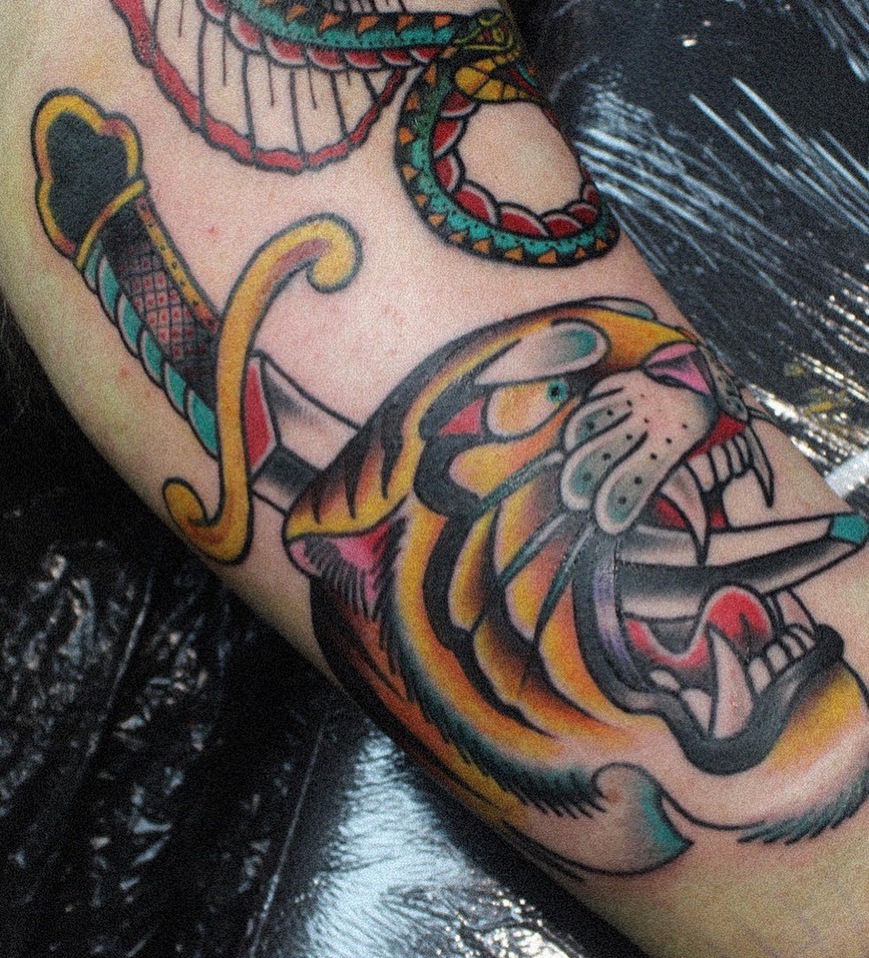
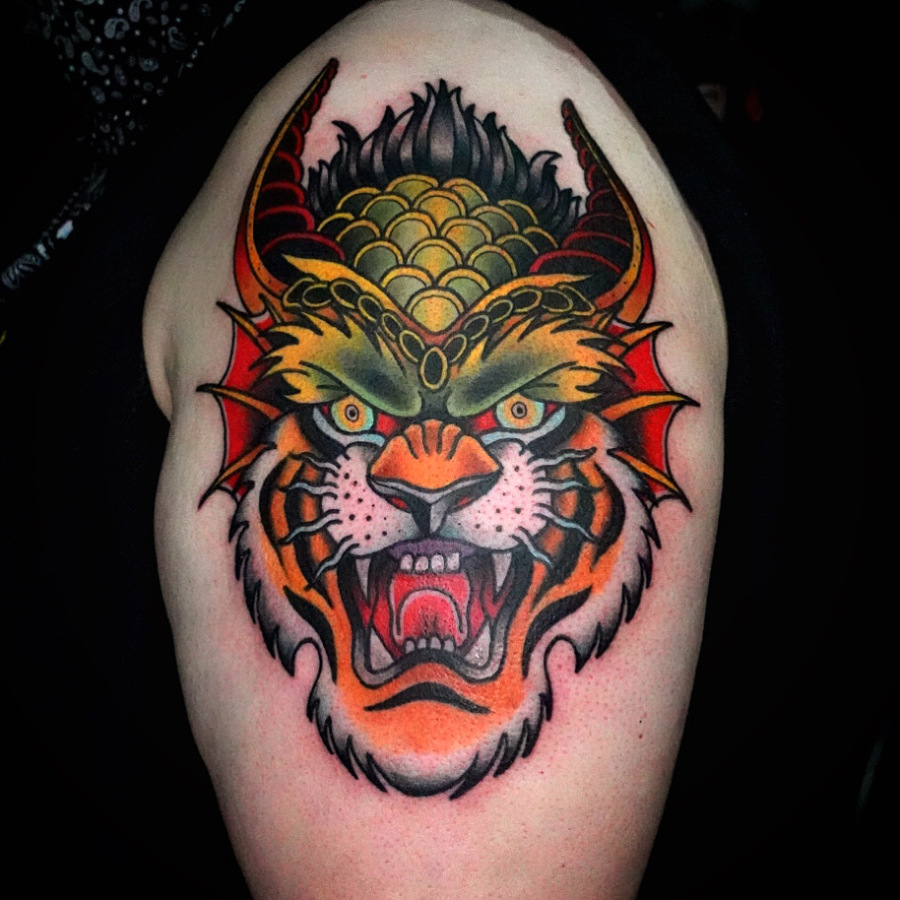
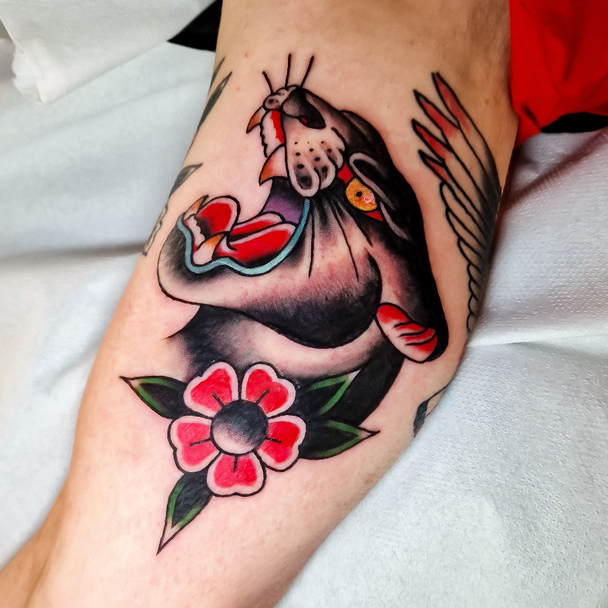
Panthers and big cats are among the most requested traditional subjects and some of the most technically satisfying to execute. The challenge is capturing genuine menace and energy within a graphic, stylised form. Done well a traditional panther is one of the most visually commanding pieces in tattooing and something every tattooist will smile at when requested to tattoo.


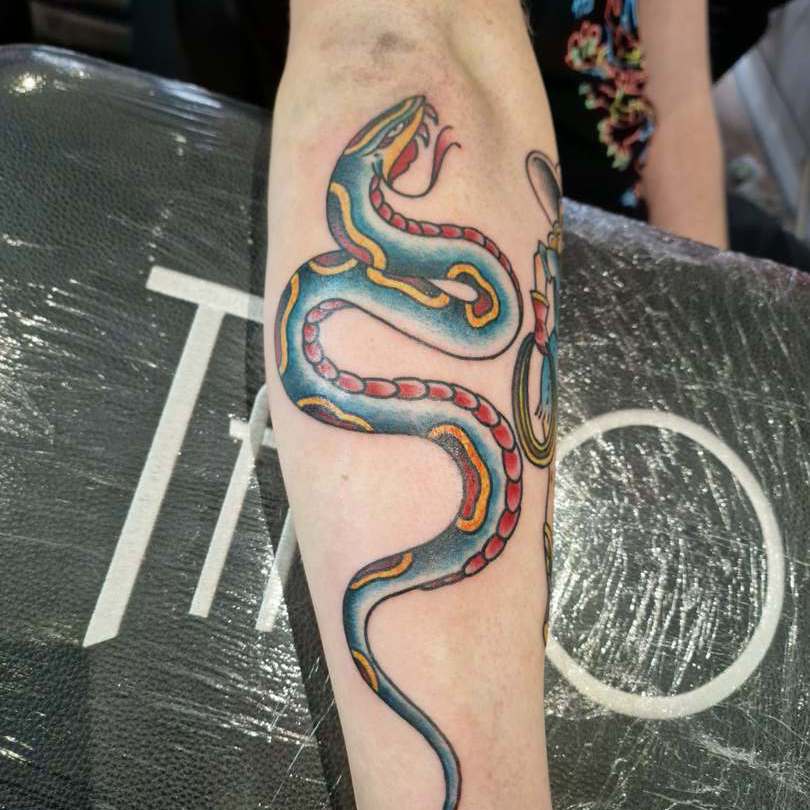
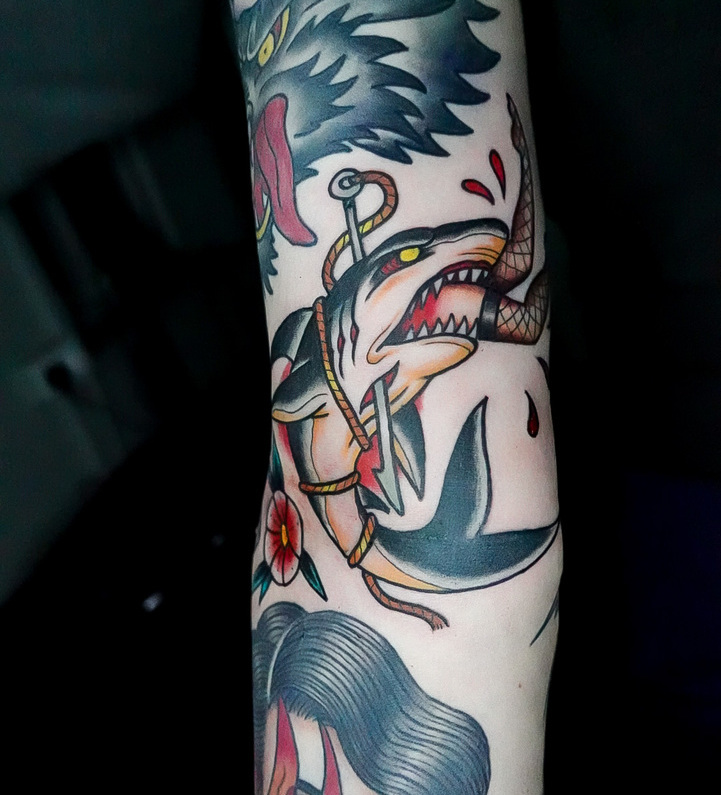
Snakes are one of the most versatile traditional subjects. They fill a composition naturally, work across almost any placement on the body and carry centuries of symbolic weight. A well-drawn traditional snake in full colour is a genuinely beautiful object.

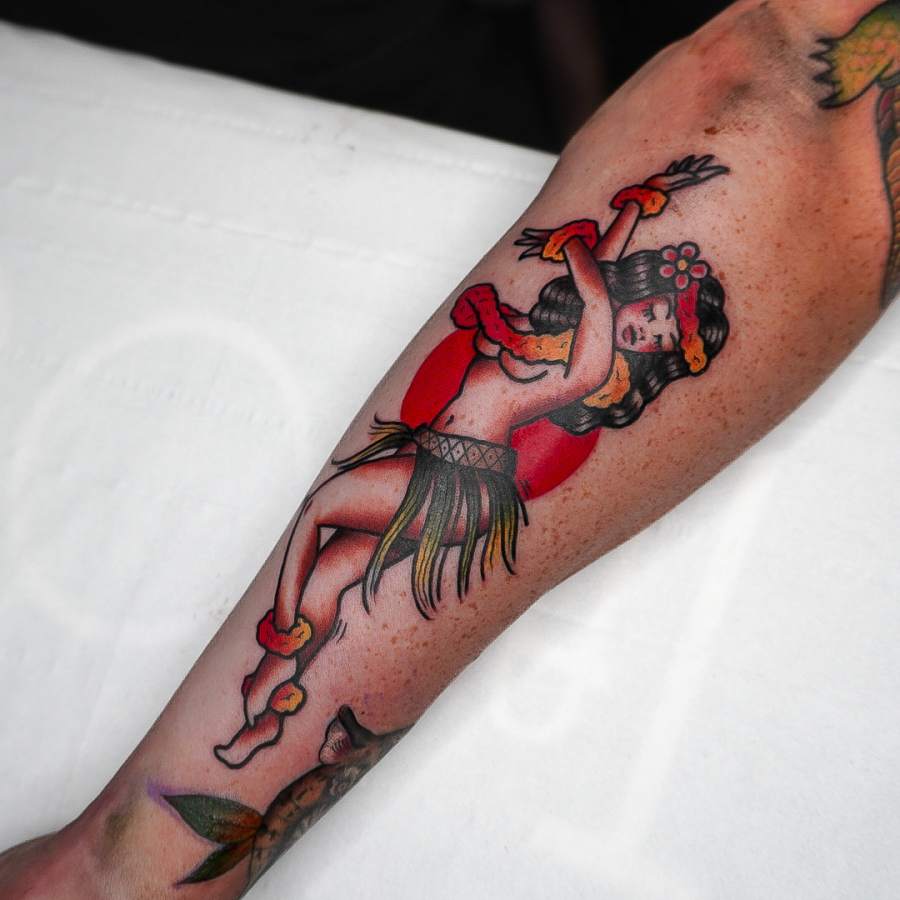
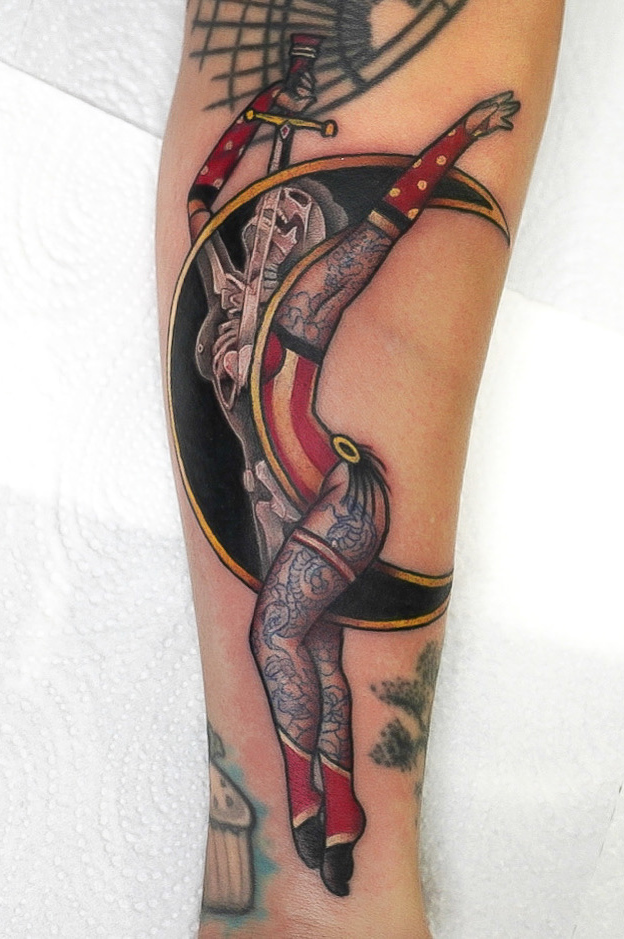
Portrait subjects, women's heads, fortune tellers, hula dancers, gypsies, carry the figurative tradition of the style. Getting a face right within the graphic constraints of traditional tattooing is genuinely demanding. The proportions, the expression, the way hair and features are simplified without losing character. These are among the most technically challenging pieces in the traditional canon and some of the most rewarding when they land.


Daggers, hearts, swallows and banners are the foundational vocabulary of the style. Used individually they are strong standalone pieces. Combined into compositions they allow for almost unlimited variation within a consistent visual language.

Traditional Tattooing at Broken Puppet

Rick has been working in traditional tattooing for over twenty years and Simon over a decade. The style is part of their foundation but it has never been the limit of what he does with it.


Their straightforward traditional work, the panthers, the snakes, the portrait subjects, the classic compositions, is executed with the confidence that comes from having spent years understanding why the style works rather than just what it looks like. The colour saturation in his traditional pieces is consistently strong. The linework is clean. The compositions are considered. This is the work of someone who has genuinely mastered the fundamentals.


What makes Rick's relationship with traditional tattooing particularly interesting is what he has built on top of those fundamentals. The Trad X-Ray series takes traditional subject matter and applies an x-ray concept to it, revealing the skeletal structure beneath the classic imagery in a way that manages to feel both unexpected and completely in keeping with the spirit of the style. The face slider designs take traditional portrait subjects and push the placement and composition into territory that conventional traditional tattooing wouldn't go near.

These aren't departures from traditional tattooing. They are the work of someone who understands the style well enough to know exactly where its boundaries are and how to push them in ways that feel earned rather than gimmicky.

Simon also works in traditional tattooing and brings his ornamental sensibility to it in ways that produce something distinctive. His traditional pieces tend to have a decorative quality to the surrounding work and border elements that sits naturally alongside the bold central imagery of the style.

What to Consider Before Booking a Traditional Tattoo

Traditional tattooing works across almost any placement on the body but some placements suit it better than others. The forearm, upper arm, calf and thigh are the classic locations for a reason. The style's graphic quality reads best on areas with a reasonably flat surface and enough room to let a composition breathe.


Size matters more in traditional tattooing than in some other styles. The bold outlines and solid fills that make the style work require a certain minimum scale to land properly. Very small traditional pieces can look muddled if the design is too complex for the space. During consultation the team will give you an honest view on what size works for the piece you have in mind.


Traditional tattooing is one of the most colour-positive styles in tattooing, and colour work is genuinely one of its strengths. Black and grey traditional work exists and can be beautiful, but if you want the full impact of the style the colour palette is where it lives.


If you are drawn to traditional tattooing but want something that goes beyond the classic subject matter, that is exactly the kind of conversation worth having at a consultation. Rick's Trad X-Ray and face slider work came from exactly those conversations.


Book a Traditional Tattoo Consultation


If you know what you want, get in touch and we will make it happen. If you have a feeling but are not sure how to turn it into a brief, that is what the consultation is for.


Book online: https://www.brokenpuppet.co.uk/booking-contact-us/ or click the button below

Call us: 01903 231951

Walk in: 4 Gratwicke Road, Worthing, West Sussex BN11 4BH

We are open Monday, Wednesday, Thursday, Friday and Saturday 11am to 6pm.


TRADITIONAL NEVER GOES OUT OF STYLE

Frequently Asked Questions About Traditional Tattooing

How much does a traditional tattoo cost at Broken Puppet?

Traditional tattoos are priced based on size, complexity and time. Small standalone pieces start from around £100. More involved compositions and larger pieces are priced at consultation. Rick will give you a clear honest quote when you get in touch.


How well do traditional tattoos age?

Traditional tattooing ages better than almost any other style. The bold outlines prevent ink migration, the solid colour fills hold their shape and the limited palette remains readable as the tattoo matures. A well-executed traditional tattoo looks like itself for decades. It is one of the main reasons the style has never gone out of fashion.


Can I get a traditional tattoo if I already have other styles on my body?

Yes. Traditional tattooing actually sits comfortably alongside a wide range of other styles and is one of the most versatile additions to a mixed collection. Placement and how the piece is framed matters. The team will advise on how to make it work within your existing collection during consultation.


What is the Trad X-Ray style?

The Trad X-Ray series is Rick's original concept. Traditional subject matter rendered as if seen under an x-ray, revealing the skeletal or internal structure beneath the classic imagery. The style retains the bold linework, palette and compositional rules of traditional tattooing while taking the subject matter somewhere genuinely unexpected. If you want to see examples, his portfolio page has a dedicated section.


Is traditional tattooing suitable for a first tattoo?

Yes, and it is a genuinely good choice for a first tattoo. The style is clear and legible from the day it is done. It heals well, ages well and gives you something that will look good for the rest of your life. For anyone who wants their first piece to be something with real visual presence and genuine longevity, traditional tattooing is one of the most dependable options there is.


Do you do black and grey traditional work?

Yes. While traditional tattooing is most commonly associated with bold colour, black and grey traditional work has a long history and can be extremely striking. If you want the structure and graphic quality of the style without the colour, mention it at consultation.
Print | Sitemap
© Broken Puppet Tattoo Studio Worthing, West Sussex

Call

E-mail

Directions